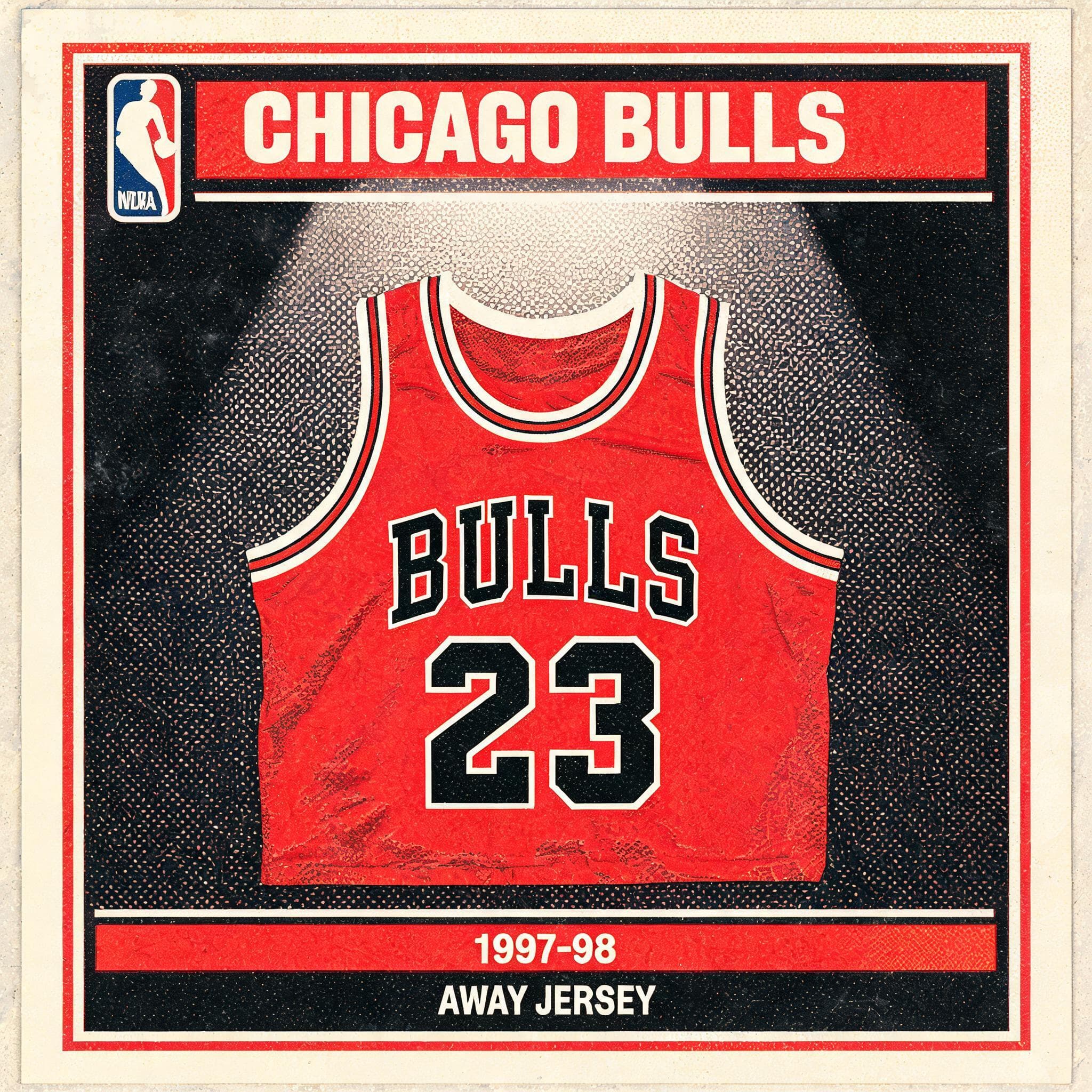
The Night That Started Everything
March 18, 1995. Michael Jordan faxed two words to the world: "I'm back."
But when he returned wearing #45 instead of #23, something felt off. He scored 19 against Indiana. Missed the game-winner. Then Orlando's Nick Anderson stripped him in the playoffs and told reporters: "That's not the old #23."
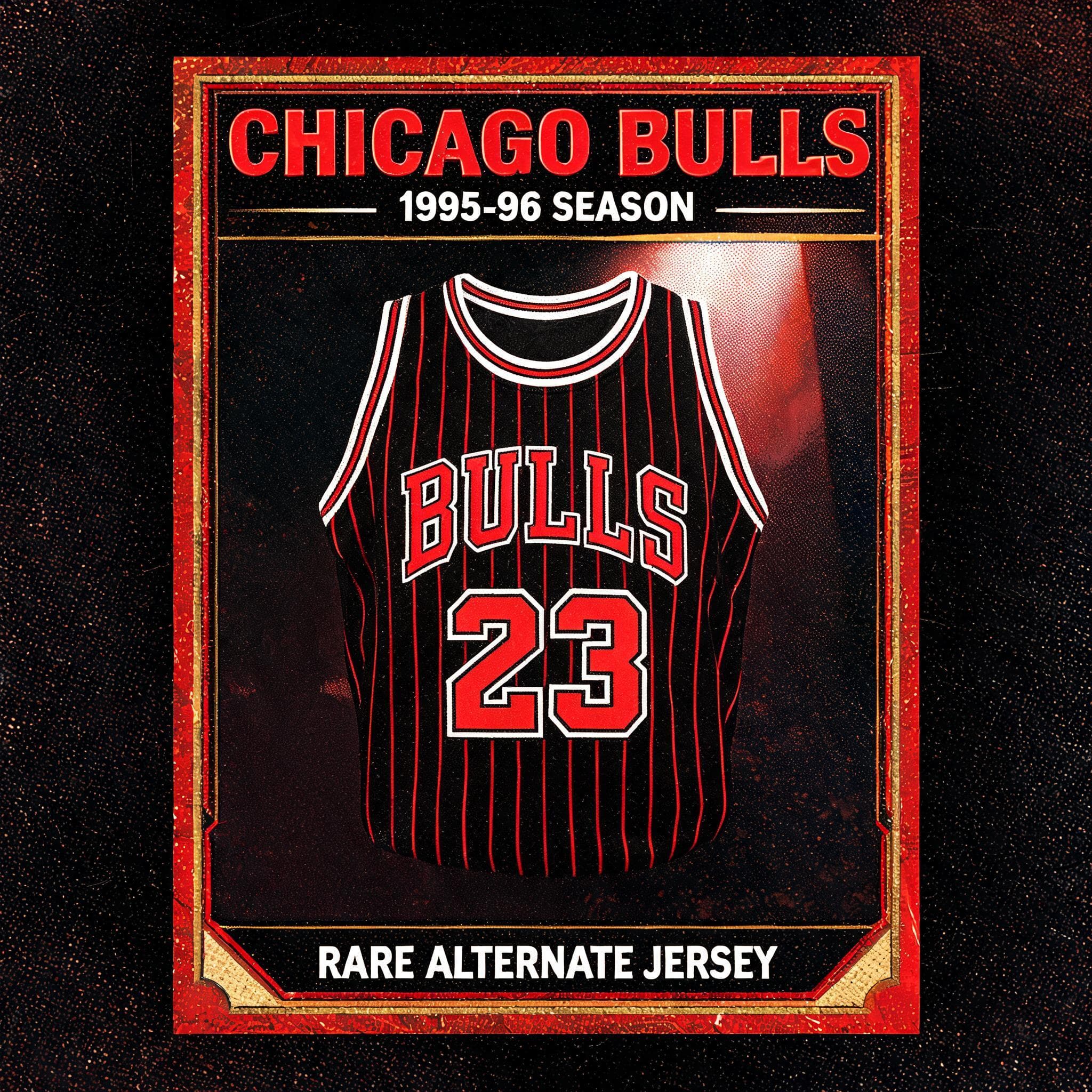
Jordan heard every word. That summer, he didn't just train — he rebuilt. And when the 1995-96 season began, everything was different. The number. The body. The attitude. And the jersey.
Jordan was actually fined $25,000 per game by the NBA for switching back to #23 mid-playoffs in 1995 — because uniform changes require advance notice. He paid it without blinking. The Bulls made sure the pinstripe was ready for #23 from day one of the next season.
Why Black? Why Pinstripes?
In 1995, the NBA was in a visual arms race. Orlando's pinstripe jerseys were outselling every team in the league despite the Magic being only six years old. The Grizzlies and Raptors were pushing teal and purple dinosaurs. The old guard needed to respond.
Chicago's design challenge was unique: how do you modernize the most recognizable uniform in basketball without destroying it?
The Black Base — Black had never dominated a Bulls jersey. Red and white were sacred. The black alternate sent a message: this isn't the 1993 team that retired gracefully. This is a team with something to prove.
The Pinstripes — Thin red vertical lines, borrowed from baseball. The Cubs had worn pinstripes since 1907. The White Sox made them famous in black. For Chicago, pinstripes aren't decoration — they're identity.
The Typography — "BULLS" in tight, condensed sans-serif. No outlines, no gradients, no tricks. Just red screaming on black. Readable from the nosebleed seats at the United Center.
The Hidden Detail — On authentic versions, the pinstripes align perfectly across the front seam. This is the #1 way to spot fakes — counterfeits almost always have misaligned stripes at the center panel join.
“When we came out in those alternates, the energy was different. Even in warmups, guys on other teams would look over. That jersey made a statement before the ball was tipped.”
— Jud Buechler, Bulls forward (1994-98), on the Dan Patrick Show
Moments Burned Into the Fabric
The pinstripe was an alternate — worn roughly 15-20 times that season. But it showed up at the exact right moments:
The Bulls' equipment manager kept six identical pinstripe jerseys ready for Jordan each game — because MJ would change at halftime if he sweated through the first one. Some game-worn "Jordan pinstripes" sold at auction are actually second-half jerseys that only saw 24 minutes of action. Auction houses now distinguish between "first half" and "second half" game-worns, with first-half pieces commanding a 30-40% premium.
The Sneaker Connection Nobody Planned
Here's a design accident that became permanent lore: the Air Jordan XI "Bred" (black/red patent leather) released in March 1996 — right as the Bulls were making their historic push.
Jordan wore the XIs with the pinstripe jersey. Black patent leather shoes + black pinstripe jersey = arguably the single most stylish athlete-uniform-shoe combination in sports history.
But it wasn't coordinated. Nike's release calendar and the Bulls' jersey rotation were completely independent decisions. The match was pure serendipity. Tinker Hatfield (the XI designer) later said he didn't even know the Bulls had a black alternate until he saw it on TV.
Today, resellers explicitly market Jordan XI Breds as "the pinstripe shoe." A cultural connection born entirely by accident.
Why It Disappeared After One Season
This is the question every collector asks. The jersey was massively popular. Merchandise sales were record-breaking. So why kill it?
1. The Nike Takeover (1997) — Champion lost the NBA uniform contract. Nike redesigned every team's template. They wanted their era to have its own identity.
2. The "Once Is Enough" Philosophy — Bulls VP Steve Schanwald reportedly argued the pinstripe should be retired with the record. "You can't wear that jersey and lose. And eventually, you will lose in it. Better to quit perfect."
3. The Economics of Scarcity — A jersey you can't buy anymore is a jersey people will pay anything for later. Mitchell & Ness would eventually sell reproductions at $300+ a piece — a margin impossible if the original had been worn into the 2000s.
Mitchell & Ness's Jordan pinstripe Authentic jersey has been their #1 selling single SKU every year since 2008 — 18 consecutive years. No other retired jersey from any sport comes close.
What It's Worth Today
How to Spot a Fake
-
Pinstripe Alignment — On authentics, red stripes align perfectly across the center seam. Fakes show a visible "break" where front panels meet.
-
Red Color Accuracy — Bulls red is Pantone 200C — a true crimson. Fakes often skew orange-red or maroon.
-
Number Stitching — The "23" should be clean-cut tackle twill with zero loose threads. Run your finger along the edge — authentic feels sealed, fakes feel furry.
-
Mesh Weight — Authentic Mitchell & Ness weighs ~380g vs ~240g for fakes (size L). Thin = fake.
-
The Jock Tag Test — On 1996 Champion originals, the jock tag uses a specific condensed sans-serif. Modern M&N versions have a holographic sticker on the left hip — if it doesn't shift color when tilted, it's printed (fake).
The Cultural Afterlife
In Hip-Hop: By '96, oversized NBA jerseys with baggy jeans was the hip-hop uniform — a look Allen Iverson would soon make inseparable from the NBA itself. But the black pinstripe was the crown jewel — it worked with Timbs and gold chains in a way the red/white originals couldn't. Notorious B.I.G. wore it in the "Hypnotize" video shoot photos. Aaliyah draped one over a sports bra for a magazine cover.
In Film: Costume designers use it as visual shorthand for "peak 90s cool." It's appeared in The Last Dance promotional material, Netflix period pieces, and music videos by artists born after Jordan retired.
In Fashion: Virgil Abloh cited the pinstripe pattern in a 2019 Off-White collection. BAPE released a suspiciously similar red-on-black pinstripe jersey in 2017.
“Every single 'city edition' jersey the NBA releases today is chasing what that Bulls pinstripe did in 1995 — make a team look completely different for one moment, so the moment becomes unforgettable.”
— Paul Lukas, Uni Watch founder
The Verdict
The Michael Jordan Chicago Bulls pinstripe jersey is the intersection of perfect timing, perfect design, and perfect performance. It existed for one season because one season was all it needed.
72 wins. One championship. Then gone.
That's why it's Article #1. Every jersey on this site will be measured against it.
Where to Buy
Affiliate links — we earn a small commission at no extra cost to you. Prices as of last update; click through for current pricing.
Resale Price Trend
+23.7%Collector Tools
Affiliate disclosure: Some links earn us a small commission at no extra cost to you. We only recommend products we'd buy ourselves.