Not One, Not Two...
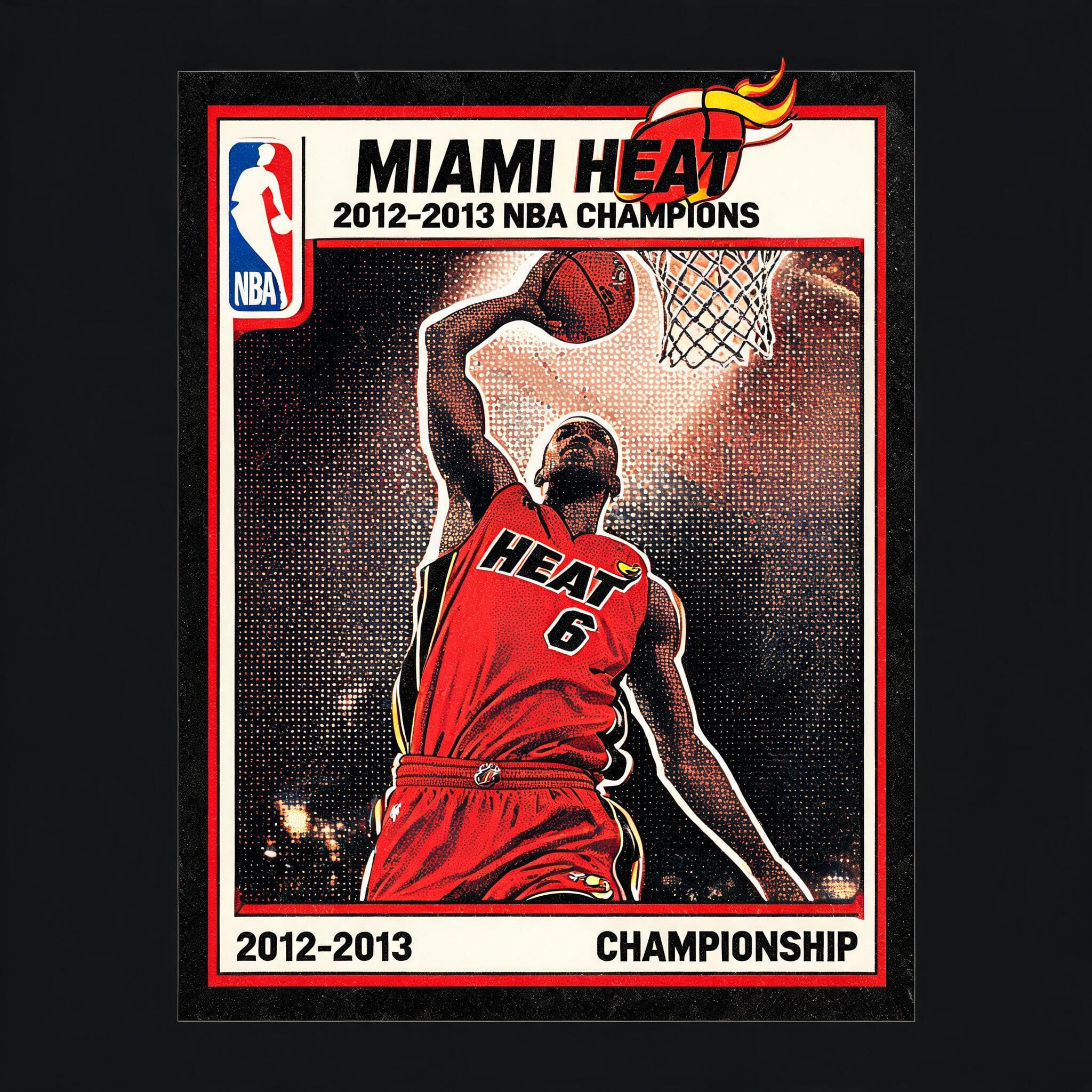
"Not one, not two, not three, not four, not five, not six, not seven..." LeBron James stood on a stage at American Airlines Arena in July 2010, promising a city championships before he'd played a single game in Miami red. The crowd screamed. The country cringed. And the #6 Heat jersey became the most polarizing piece of cloth in basketball.
For four years, LeBron in Miami red represented everything casual fans claimed to hate about modern basketball: superteams, player empowerment, guaranteed championships through collusion rather than competition. And for four years, LeBron in Miami red was also the most dominant basketball player on earth — two championships, two Finals MVPs, four straight Finals appearances, and a 27-game winning streak that remains the second-longest in NBA history.
The jersey absorbed both narratives. It's simultaneously a villain's costume and a champion's uniform. That duality makes it one of the more interesting pieces in the LeBron market.
The #6 Decision
LeBron chose #6 in Miami specifically to distance himself from Michael Jordan comparisons. "I just think what Michael Jordan has done for the game, I feel like no one should wear #23," he told reporters. The number choice was strategic branding: #6 was a clean slate. A new chapter, a new number, a new LeBron.
For collectors, #6 creates an instant authentication marker. Any "LeBron Miami" jersey with #23 is either fake or a custom. It also creates a finite window — LeBron wore #6 only during the Miami years (2010-2014), making it era-specific in a way that #23 (worn across three franchises) is not.
Championship Season Specifics
The smart money in LeBron's Miami market targets championship-season pieces:
2011-12 (First Championship): LeBron's redemption season after the 2011 Finals collapse against Dallas. He averaged 28.6 PPG in the playoffs. The Finals MVP trophy silenced the "can't win the big one" narrative. Jerseys specific to this season carry the 2012 Finals patch on the left shoulder.
2012-13 (Second Championship): The 27-game win streak season. LeBron shot 56.5% from the field — historically efficient. The Ray Allen Game 6 shot saved their season, and LeBron closed Game 7 with a triple-double. Back-to-back championship jerseys with the Finals patch are the grails of this era.
Why not 2010-11 or 2013-14? The 2011 Finals loss to Dallas (LeBron averaged 17.8 PPG in the Finals) creates a negative narrative for that season's jersey. And 2013-14 ends with the Spurs dismantling Miami in five games — not exactly the note you want on a display piece. The market agrees: championship seasons trade at 30-50% premiums over non-championship years.
The Red vs. White vs. Black Question
Miami offered three standard colorways during LeBron's tenure:
Home White: Clean, classic, Miami Vice–adjacent. The jersey LeBron wore for most home playoff games. Purists prefer it.
Road Red: The iconic look. Red with black and white accents. This is what most people picture when they think "LeBron Heat." It's the most produced and most available — but also the most recognized.
Alternate Black: The "Back in Black" alternate with red accents. Worn sparingly but visually striking. Lower production numbers mean slightly higher secondary market prices.
For a single-piece collection: buy red. It's the definitive LeBron Heat look. For investment: alternate black has better appreciation potential due to lower supply.
Authentication Guide
-
Template: Adidas Revolution 30 (2010-2014). Climacool mesh with hexagonal weave. Slim cut, lightweight.
-
Color: Heat red is an orange-red (not true red, not crimson). Compare against verified photos — fakes consistently skew too dark or too orange.
-
Number material: Multi-layer tackle twill. The #6 should have a white base layer with red outer layer, creating a dimensional effect.
-
Jock tag: NBA holographic logo shifts silver-to-rainbow. The Adidas trefoil should be clean and crisp, not blurry.
-
Size tag placement: Inside left hem, below the seam. Should include made-in country, material composition, and care instructions in multiple languages.
Where to Buy
Affiliate links — we earn a small commission at no extra cost to you. Prices as of last update; click through for current pricing.
Resale Price Trend
+18.8%Collector Tools
Affiliate disclosure: Some links earn us a small commission at no extra cost to you. We only recommend products we'd buy ourselves.